
AssureCKD Team Spotlight
Behind every breakthrough in kidney care are clinicians and innovators working to move detection and treatment earlier, where it can make the greatest difference. In this Team Spotlight, Dr. Paul Komenda shares his journey in kidney care innovation and explains why early, accessible screening is essential to improving outcomes for people living with chronic kidney disease.
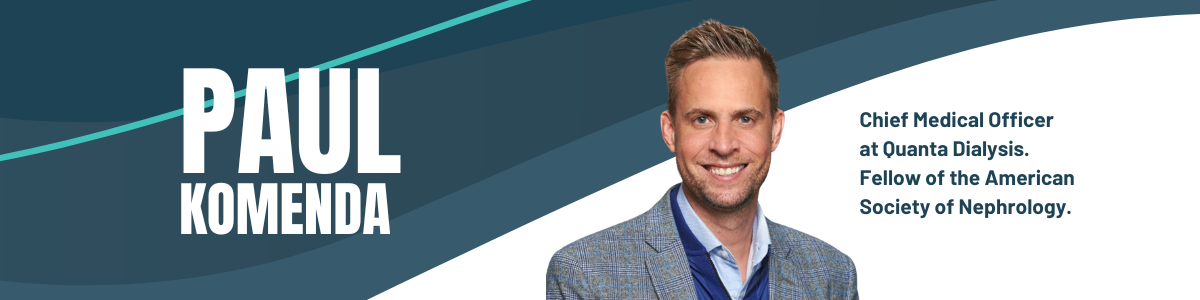
Dr. Paul Komenda - MD, MHA, FRCPC, FASN (Director)
Can you tell us about your career path and what inspired you to focus on kidney care innovation?
My career has always sat at the intersection of clinical care, population health, and systems improvement. I completed my medical training and internal medicine residency at Western University, followed by nephrology fellowship training at the University of British Columbia. While there, I also pursued advanced research training in epidemiology and health economics and completed an MBA in health administration.
That combination shaped how I think about kidney care. Rather than focusing only on individual patient encounters, I became interested in how healthcare systems work and where they fail patients. Early in my faculty career at the University of Manitoba, I focused on process engineering and clinic optimization while remaining an active clinician. Over time, my work expanded into building and scaling large clinical programs, including founding one of the largest home hemodialysis programs in Canada and leading award-winning CKD screening initiatives using point-of-care testing, particularly in partnership with First Nations communities.
These experiences reinforced a consistent lesson. Earlier detection, delivered closer to where people live and receive care, has a profound impact on outcomes.
What drew you to join AssureCKD?
What attracted me to AssureCKD was how closely the mission aligns with the work I have been doing for nearly two decades. Most people with chronic kidney disease are diagnosed far too late, often when intervention options are limited and the costs, both human and systemic, are already high.
AssureCKD is addressing that exact gap by bringing accurate point-of-care screening closer to where patients actually receive care. What stood out to me was the combination of clinical rigor, practicality, and scalability. This is not innovation for innovation’s sake. It is a solution designed to fit real workflows, support earlier decision-making, and ultimately change the trajectory of kidney disease at a population level.
How do you see AssureCKD’s work fitting into the continuum from prevention to treatment?
AssureCKD operates at the most impactful point in the continuum, which is early identification. Globally, approximately 12 to 15 percent of the population has early-stage chronic kidney disease, yet many individuals remain undiagnosed until they are facing dialysis.
The contrast with cancer screening is striking. Most people accept regular cancer screening because we understand how dangerous it is to catch cancer too late. Kidney disease, on the other hand, can often be detected with a simple blood and urine test, and early action can make a huge difference in preventing more serious outcomes.
By enabling earlier, easier, and more scalable screening, AssureCKD helps shift kidney care upstream. That shift improves quality of life for patients and reduces long-term costs and infrastructure demands for health systems.
What are the biggest rewards and challenges of supporting a startup from a clinical perspective?
The greatest reward is impact. Working with a startup allows clinicians to help shape solutions from the ground up and ensure they are clinically meaningful, not just technically impressive.
The challenge is balancing innovation speed with clinical rigor and regulatory realities. Startups often move quickly, while healthcare requires careful validation and trust. When clinicians are involved early, however, that tension becomes productive. It helps de-risk development and guides technologies toward solutions that will be adopted, reimbursed, and trusted in real-world settings.
How can collaboration between clinicians and technologists improve outcomes for CKD patients?
Strong collaboration ensures that technology is designed with real patients and workflows in mind. Technologists bring cutting-edge tools, while clinicians understand how care is delivered, where bottlenecks exist, and what actually changes outcomes.
In the case of AssureCKD, the close collaboration between scientists working in microfluidics and clinician-scientists who understand kidney disease has allowed the technology to evolve toward a solution that fits seamlessly into the healthcare continuum. That alignment is essential for improving adoption and ultimately improving patient outcomes.
What long-term changes do you believe accessible diagnostics could bring to kidney health systems?
Accessible diagnostics have the potential to fundamentally reshape kidney care. By making screening cheaper, portable, and deployable in clinics, pharmacies, community spaces, and low-resource settings, we can dramatically increase awareness and early intervention.
Dialysis carries mortality rates comparable to or worse than many metastatic cancers, yet kidney disease does not receive the same public health urgency. Earlier identification allows patients to start treatment sooner and, in many cases, delay or prevent dialysis altogether.
In the long term, democratizing access to diagnostics moves kidney care from a reactive model to a preventive one. That shift benefits patients, families, and healthcare systems alike.
You can learn more about Paul and AssureCKD by following us on Linkedin!
