
The Hidden Cost of Late CKD Diagnosis
Chronic kidney disease is one of the most expensive chronic conditions in healthcare today. Yet much of its burden is driven by a problem healthcare systems can meaningfully improve, which is late diagnosis.
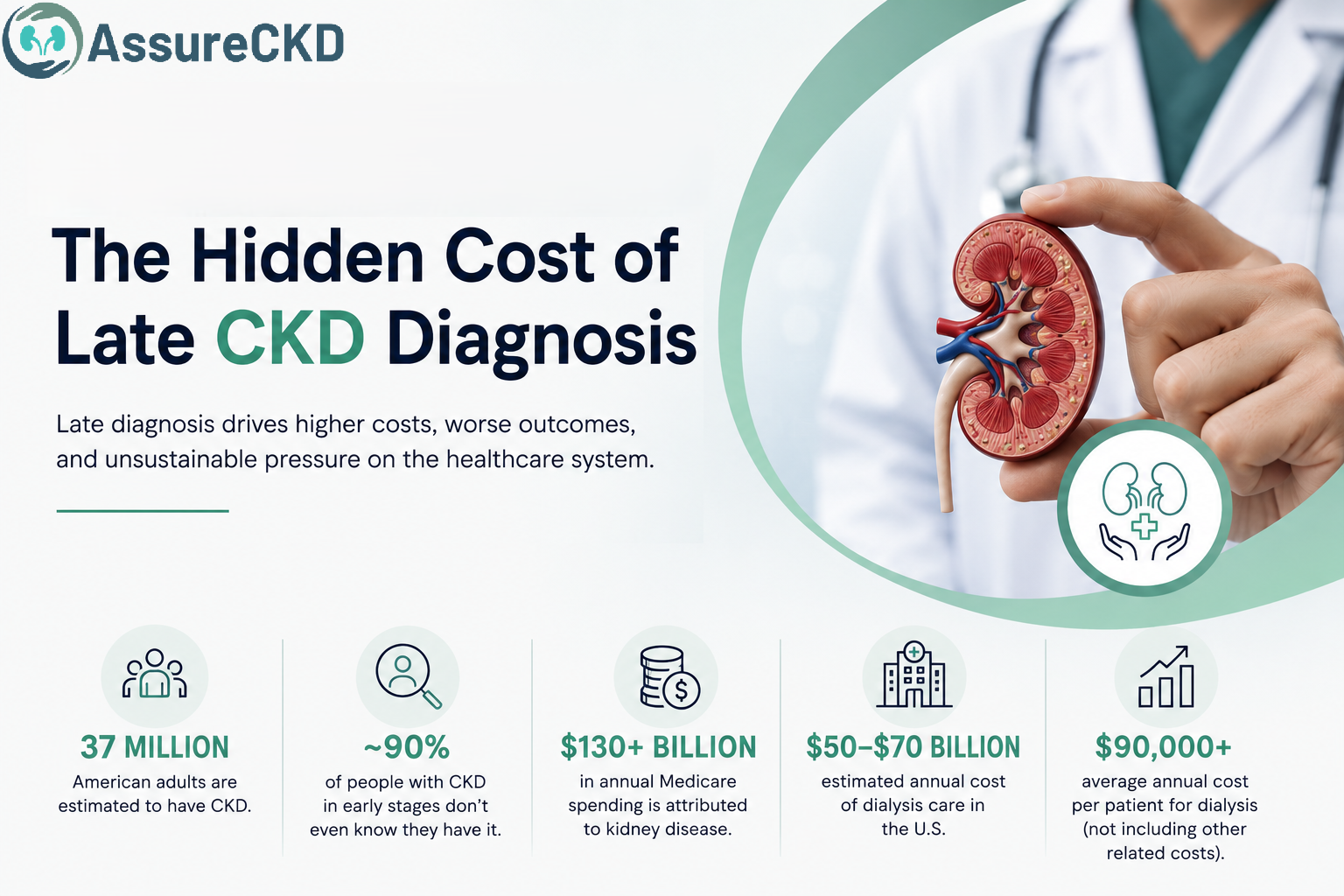
In the United States, kidney disease accounts for more than $130 billion in annual Medicare spending. Dialysis care alone is estimated to cost between $50-70 billion each year, and the average annual cost of dialysis can exceed $90,000 per patient. The problem is not only large, it is growing.
Roughly 37 million American adults are estimated to have chronic kidney disease, but nearly 90% remain unaware they have it in its earlier stages. By the time many patients are diagnosed, kidney function has already significantly declined, reducing the opportunity for earlier, lower-cost intervention.
For patients, that can mean fewer options and a higher risk of disease progression. For healthcare systems, it means higher costs, more complex care, and greater pressure on already strained resources.
The Cost of Delayed Action
The financial burden of CKD starts long before kidney failure. As kidney function worsens, patients face rising risks of cardiovascular complications, hospitalizations, emergency department visits, specialist referrals, and long-term disease management.
For clinics and healthcare systems, this creates growing operational pressure. Patients require more coordination, more follow-up, and more specialized care. For payers and value-based care organizations, the challenge is even larger. Although patients with kidney failure represent a relatively small percentage of the Medicare population, they account for a disproportionately high share of healthcare spending.
In many cases, healthcare systems are not simply paying for kidney disease itself. They are paying for years of delayed diagnosis, missed screening opportunities, and avoidable progression.
Why Early Detection Still Falls Short
Clinical guidelines for CKD screening already exist, particularly for high-risk patients such as those with diabetes, hypertension, cardiovascular disease, or a family history of kidney disease. However, in real-world care delivery, early identification remains inconsistent.
Traditional testing pathways often involve multiple disconnected steps: ordering lab work, sending patients off-site, waiting days for results, reviewing lab reports, and scheduling follow-up appointments. Each step creates friction.
For patients, that friction can mean missed appointments, incomplete testing, or delayed follow-up. For providers, it can mean additional administrative burden and another gap to manage in an already busy clinical workflow.
The result is that CKD is often not identified until later, when intervention is more difficult and healthcare costs are already rising.
The Opportunity for Better Testing Pathways
Healthcare systems are increasingly focused on prevention, population health, and value-based care models that reward earlier intervention and better long-term outcomes. CKD sits at the center of all three.
Improving access to faster, more practical kidney testing pathways could help healthcare providers identify at-risk patients earlier, intervene sooner, and create more opportunities to slow disease progression before irreversible damage occurs. This is especially important in settings where high-risk patients are already being seen, but kidney screening is not consistently completed.
At AssureCKD, we believe the next generation of kidney screening must be easier to access, faster to complete, and better integrated into the point of care. Earlier detection should not depend on a fragmented testing journey that patients may never complete, because when CKD is identified earlier, healthcare systems benefit incredibly.
